
Quick Answer
The Texture That Gives a Bad Repair Away
A botched paintless dent repair usually shows up as a rippled, dimpled surface texture — technicians call it “pickle” or “oatmeal” — caused by pushing too hard and too fast. If the clear coat was cracked in the process, no PDR technician can fix it and the panel now needs a body shop. If the paint is intact, an experienced technician can usually still finish the repair, though it costs more than the original job would have.
What It Looks Like
Ask Travis what a bad repair looks like and the answer comes fast: "It looks like pickle. Or oatmeal." He means the surface texture — a panel that's no longer smooth, covered in small highs and lows where a tool was driven into the back of the metal too hard and too quickly. Under a light board it's unmistakable. In a parking lot, most owners see it as a vague wrongness in the reflection.
“It looks like somebody got a deal.”
Why It Happens — and It Isn't Incompetence Alone
The mechanism Travis describes is economic before it's technical. A technician who won the job on price has, by definition, sold themselves less time than the repair needs.
"They push too hard, too quickly," he says, "and the reason they're doing that is because they only have a certain amount of time to do that dent — because they've already priced themselves out of the job."
Rushed pushes concentrate force in a single spot instead of distributing it across dozens of small, patient moves. That's what leaves the texture. And when it goes far enough, the tip of the tool makes what he calls a prick — a point of pressure sharp enough to crack the clear coat on the outside of the panel.
“They're cutting their teeth. They're using your car as a training mechanism.”
The Line Between Recoverable and Gone
This is the distinction every owner should understand. If the surface got marred but the paint and clear coat are intact, the panel can usually be saved. "If they mar it up but they don't crack any paint, a good technician can go in and finish the repair," Travis says. It costs more than the original job would have, and he is blunt about why: "It's like a tattoo. If you go to a tattoo parlor and want them to cover up a tattoo, they're going to charge you a premium, because they're covering up somebody else's work."
If the clear coat cracked, it's over. "Once it cracks that clear coat, you're going to the body shop to fix it," Travis says. "No other dent guy can come in and repair it." The shape can still be corrected; the finish cannot. That's the moment a $300 repair becomes a repaint — and why our body shop alternative page is careful about where the line actually sits.
Why Price Shopping Is the Actual Risk
Travis points out an asymmetry most people never notice: nobody walks into a body shop and haggles. "People bring their car, the estimator writes the quote, they drop it off and have it repaired." But with PDR, because it's a newer trade with no visible skill floor, customers call around collecting numbers.
"You never know what level of repair they're on," he says. "You're just trying to match your number to your repair. And it's dangerous — a bad technician is going to land you in a body shop faster than anything." His summary of what a low quote actually buys is the part worth remembering: "They're cutting their teeth. They're using your car as a training mechanism." One day that technician may be good. Right now your vehicle — the second most expensive thing most people own — is the practice panel. Our dent repair cost guide explains what genuinely drives a fair price.
“It Looks Like Somebody Got a Deal”
It happens often enough that it's a running joke between Travis and a friend in the trade. A customer texts a photo of a dent, gets a quote, goes and finds someone cheaper — and then comes back weeks later. They didn't get it good enough. Can you fix it?
"The first thing that comes to my mind," Travis says, "is that it looks like somebody got a deal."
What “Finished” Actually Means
The thing separating a real repair from a partial one isn't visible in a photo — it's whether the technician can take it all the way. "There's a fine line in paintless dent repair of being able to take it to the finish line," Travis says. "Not halfway. Not three quarters of the way. Not it looks better than it did. It's gone. The dent is gone."
That standard is what our before and after guide is written around, and it's the standard every repair at Dent Press is held to.
Real Repairs, Before and After
Photographs and clips from actual repairs. Watch the reflection rather than the dent — a panel is judged by whether reflected lines run straight across it, which is the same thing a technician reads off a light board.
Rear Quarter Panel Crease
Mint Hill, NC
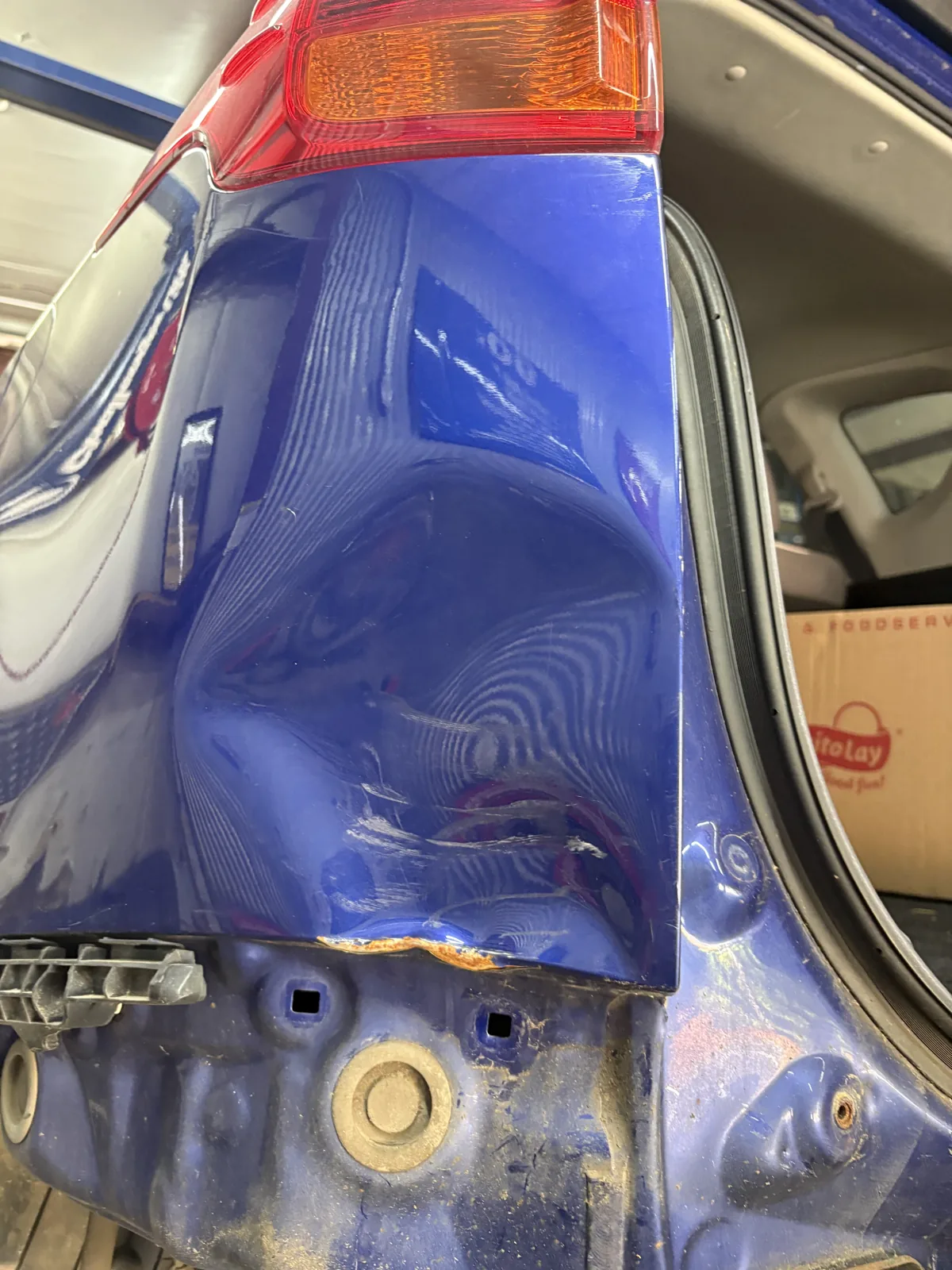
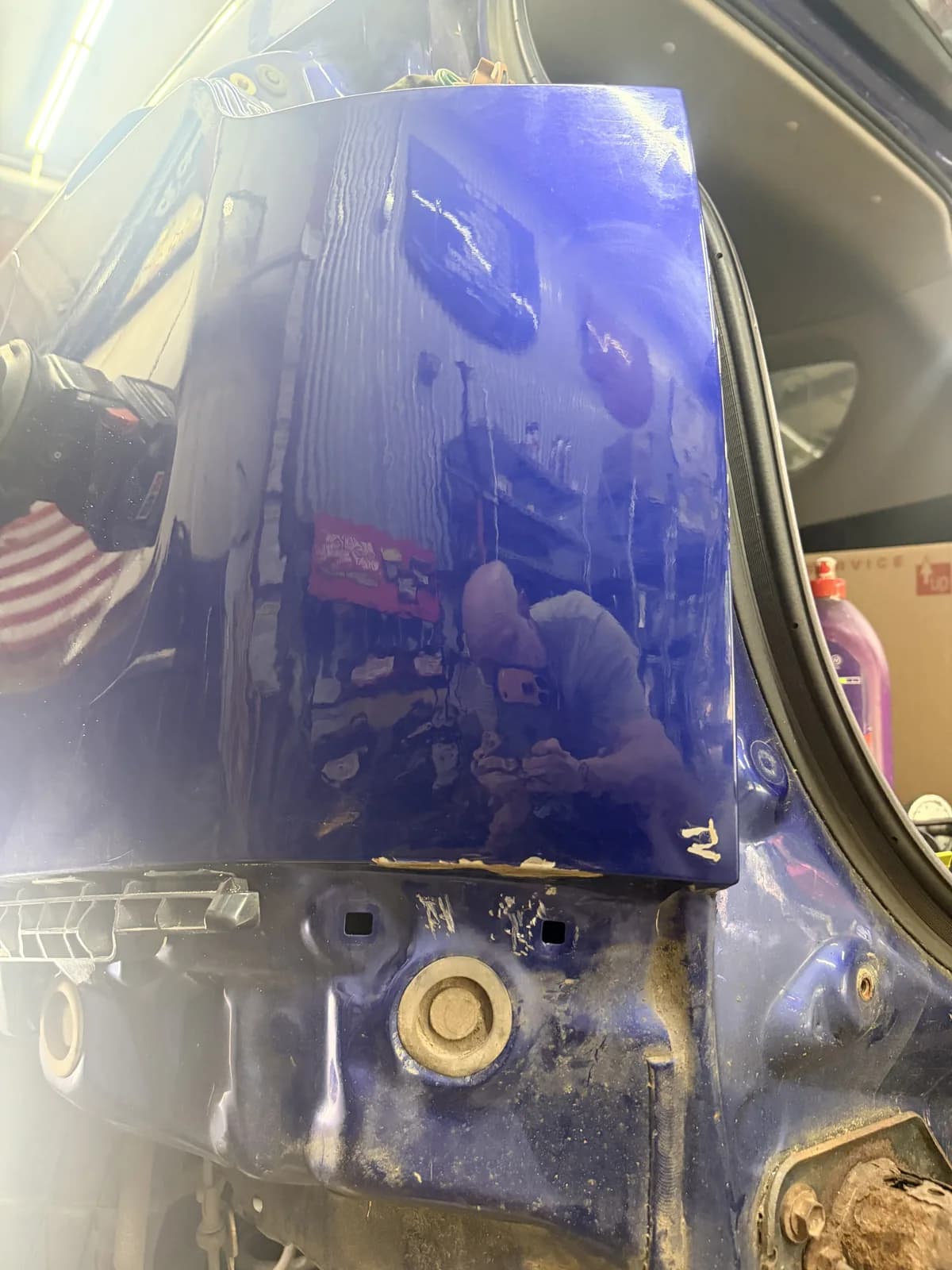
Creases are the hardest repair in PDR — the metal at the bottom of the valley is stretched and work-hardened, and it has to be released in the right order or the panel fights back. This one came all the way back.
Frequently Asked Questions
Can a bad PDR job be fixed?
If the paint and clear coat are intact, usually yes, though it costs more than the original repair because the technician is correcting someone else's work first. If the clear coat is cracked, a body shop is the only remaining option.
What does “pickle” or “oatmeal” mean?
Technician slang for the rippled, dimpled surface a panel takes on when it's been pushed too aggressively — a series of small highs and lows instead of a smooth, restored contour.
How can I tell before I hire someone?
Ask how long they've been doing PDR full time, ask who is actually performing the repair, and be suspicious of a quote dramatically below everyone else's. That gap is almost always experience, not efficiency.
I already had someone try. Should I tell you?
Yes, always. It changes the assessment and the price, and hiding it doesn't help — a technician sees it immediately anyway.
Related Services
Keep Reading
A transparent breakdown of how paintless dent repair is priced, written by the technician who sets the prices. Why access and leverage behind the panel matter more than dent size, plus depth, position, aluminum versus steel, creases versus round dents, multi-dent work, how hail pricing runs through insurance, and why a photo is enough for an accurate quote.
A walkthrough of the entire dent repair experience from the customer's side: how the photo estimate works, what happens when you arrive, why we show you the dent under the light board before touching it, what the repair looks and sounds like, how the final inspection works, and an honest explanation of what a 100 percent versus 95 percent repair means before you commit.
Bridge-style glue pullers are sold as a cheap fix and usually produce a more expensive problem. This guide covers what the kits mechanically do to a panel, why the gap between amateur and professional is skill rather than equipment, and the most honest evidence available for how long the skill actually takes to build.
A complete, plain-English explanation of paintless dent repair from a technician who has performed it daily since 2001: how it works, what it fixes, what it costs, and when it's the wrong choice.
Got a ding? Give me a ring.
Text a photo of your dent to 704-713-4663 for a free estimate — usually within minutes during business hours.
Rated 4.9 out of 5 across 103 Google reviews · Since 2001 · Shop in Mint Hill · Mobile across Charlotte