
Aluminum dent repair is paintless dent repair adapted to aluminum body panels, which are stiffer than steel, work-harden as they move, and demand more force applied under finer control — often with controlled heat. Aluminum punishes imprecision rather than punishing speed: it gives a technician fewer attempts, but one who has spent years on it works it efficiently and can move more metal per pass than steel allows.
Estimates start with a photo. Here is how to photograph a dent so the number you get back is accurate.
A growing share of the vehicles in Charlotte carry aluminum body panels, and many of their owners don't find out until a dent appears. Aluminum is lighter and stiffer than steel, which is why manufacturers love it. It resists moving, hardens further every time it's worked, and doesn't spring back toward its original shape the way steel does. Those are the facts every technician will tell you — and they are the reason most of them would rather you took the panel somewhere else.
That last property is the one that matters most. Steel has memory: relieve the tension in a dent correctly and much of the panel wants to return home on its own. Aluminum has very little memory. Every fraction of a millimeter of recovery has to be put there deliberately by the technician, push by push, with no help from the metal itself. Overwork an aluminum panel and it hardens into a shape no one can fix.
Travis reads that same set of facts the other way around. A metal that needs a harder, more deliberate push is a metal that will accept one — and in experienced hands that is leverage, not risk. After years of daily aluminum work he takes it on by preference rather than by exception, including large dents that would be difficult to finish cleanly in steel.
This is why aluminum repair is where experience separates technicians most visibly. Travis has repaired aluminum hoods, doors, fenders, and bedsides regularly for years as part of daily paintless dent repair work — from F-150 work trucks to six-figure luxury cars. Text a photo of your dent to 704-713-4663 and mention the vehicle; we'll tell you what the panel is made of and what the repair honestly involves.
How Aluminum Behaves Differently From Steel
Three properties define aluminum repair. First, stiffness: automotive aluminum alloys are typically run in thicker gauges and resist deflection more than the mild steel of a conventional door skin, so each push requires more force applied with more control — a combination that punishes sloppy technique. Second, work-hardening: aluminum hardens noticeably as it's worked, so the tenth push on the same spot meets harder metal than the first. The repair has to be planned so the metal is moved as few times as possible, because you cannot rework aluminum indefinitely the way you can nurse a steel panel.
Third, low memory: where a steel dent partially releases as tension is relieved, aluminum sits exactly where the impact left it. Combined with aluminum's tendency to form sharper, more defined dents from the same impact, this means an aluminum repair has to be planned more deliberately than an identical-looking dent in steel — the cost is in judgment before the first push, not in working slowly through it. Controlled heat helps — warming the panel makes the alloy more cooperative and reduces the risk of cracking paint on sharp damage — and knowing when and how much heat to use is part of the discipline.
None of this makes aluminum unrepairable, and none of it makes aluminum the harder job for someone who has put the hours in. It makes aluminum unforgiving — which is a different claim. The metal punishes inexperience and rewards experience, and that is precisely why the technicians who have spent years on it will often choose it. Our article on why a technician prefers aluminum covers that view, and whether aluminum panels can be repaired goes deeper into the metallurgy.
“A lot of techs don't like aluminum. I think aluminum takes a lot harder of a push.”
Which Vehicles Have Aluminum Panels?
More than most owners think. The headline example is the Ford F-150, which switched to an all-aluminum body for the 2015 model year — every F-150 since, along with the Super Duty trucks from 2017 on, wears aluminum doors, fenders, hood, and bedsides. Given how many F-150s work and park around Charlotte, aluminum bedside and door repairs are a regular part of our week.
Luxury brands adopted aluminum even earlier, chasing weight savings. Most modern BMW and Mercedes-Benz models use aluminum hoods and often aluminum doors and fenders; Audi has built heavily aluminum vehicles for decades; Jaguar and Land Rover use aluminum-intensive bodies across much of their lineups. Porsche, too, uses aluminum extensively in the 911 and its SUVs.
EVs round out the list, since panel weight directly affects range. Tesla uses aluminum for many exterior panels across its lineup, and newer EV makers like Rivian and Lucid lean on aluminum-intensive construction as well. The practical takeaway: if you drive a late-model truck, a German luxury car, or an EV, there's a good chance the dented panel is aluminum — and the repair should be quoted and performed accordingly. When in doubt, a magnet won't stick to aluminum; or just tell us the vehicle and we'll know.
Why Most Technicians Avoid Aluminum — and Travis Doesn't
Aluminum gives a technician fewer attempts. Because the alloy work-hardens with every pass, a repair plan has to be right the first time: the correct access point, the correct tool, the correct pressure, the correct order of pushes. On steel, a slightly wrong push is recoverable; on aluminum, a series of them can harden the dent into the panel permanently. That is a real risk, and it is why a large share of the trade declines aluminum work outright.
It is also why the same properties become an advantage once the judgment is there. Travis was intimidated by aluminum at first — after a career on steel, it was a relearning job. What changed his mind was discovering how much the metal will actually take. Because aluminum accepts a much harder push, an experienced technician can move more metal per pass, work faster, and finish larger dents than the equivalent repair in steel would allow.
The stakes are also higher because aluminum panels are expensive. A replacement aluminum hood or bedside, painted and fitted, is a four-figure proposition on most of the vehicles that use them, and on luxury vehicles it climbs from there. A quality PDR repair at a fraction of that cost, preserving the factory finish, is the best outcome available — which is precisely why it's worth insisting on a technician with real aluminum experience rather than the lowest bidder.
We're candid about limits, too. Sharp creases in aluminum, dents on hemmed edges, and panels that have already been worked by someone else can fall outside what PDR can fully deliver, and heat has to be managed carefully around paint. When a repair can reach 95 percent but not 100, we tell you before starting, so the decision is yours. That honesty is house policy on every repair, aluminum or not.
Aluminum Repair Pricing and Process
Aluminum repairs are quoted the same way as everything else — text a photo to 704-713-4663. Aluminum does not carry an automatic premium: what actually drives price is the dent's size, depth and location, and above all how hard it is to reach the back of the panel and get leverage on it. A small dent behind heavy bracing can cost more than a larger one in open metal, on any material. Either way it remains far cheaper than panel replacement or a body shop repaint, and the vehicle keeps its factory finish. Our dent repair cost guide explains the factors in detail.
Most aluminum repairs happen at our Mint Hill shop, where lighting and heat control are ideal, though straightforward aluminum dings are often fine candidates for mobile service. Hail-damaged aluminum hoods and roofs — a common combination after a Charlotte spring storm, especially on trucks — are handled through the same insurance process as any hail repair, and insurers routinely approve the aluminum-rate PDR pricing their estimating systems already include.
Pricing
Aluminum repairs typically price somewhat above steel for the same dent. Text a photo and your vehicle model to 704-713-4663 for an exact free quote.
How Aluminum PDR Works at Dent Press
- Step 1Text a Photo
Snap a photo of the dent and text it to 704-713-4663. You'll get a free estimate, usually within minutes during business hours.
- Step 2Get Your Quote
Travis reviews the size, depth, and location of the dent and gives you an honest price and timeline — no pressure, no upsells.
- Step 3Shop or Mobile
Bring your vehicle to our Mint Hill shop, or schedule mobile service and we'll come to your home or office in the Charlotte area.
- Step 4Drive Away Dent-Free
Most single dents are repaired in one visit, with your factory paint untouched and your panel restored to its original shape.
Real Repairs, Before and After
Photographs and clips from actual repairs. Watch the reflection rather than the dent — a panel is judged by whether reflected lines run straight across it, which is the same thing a technician reads off a light board.
Rivian R1T Tailgate
Mint Hill, NC · July 2026
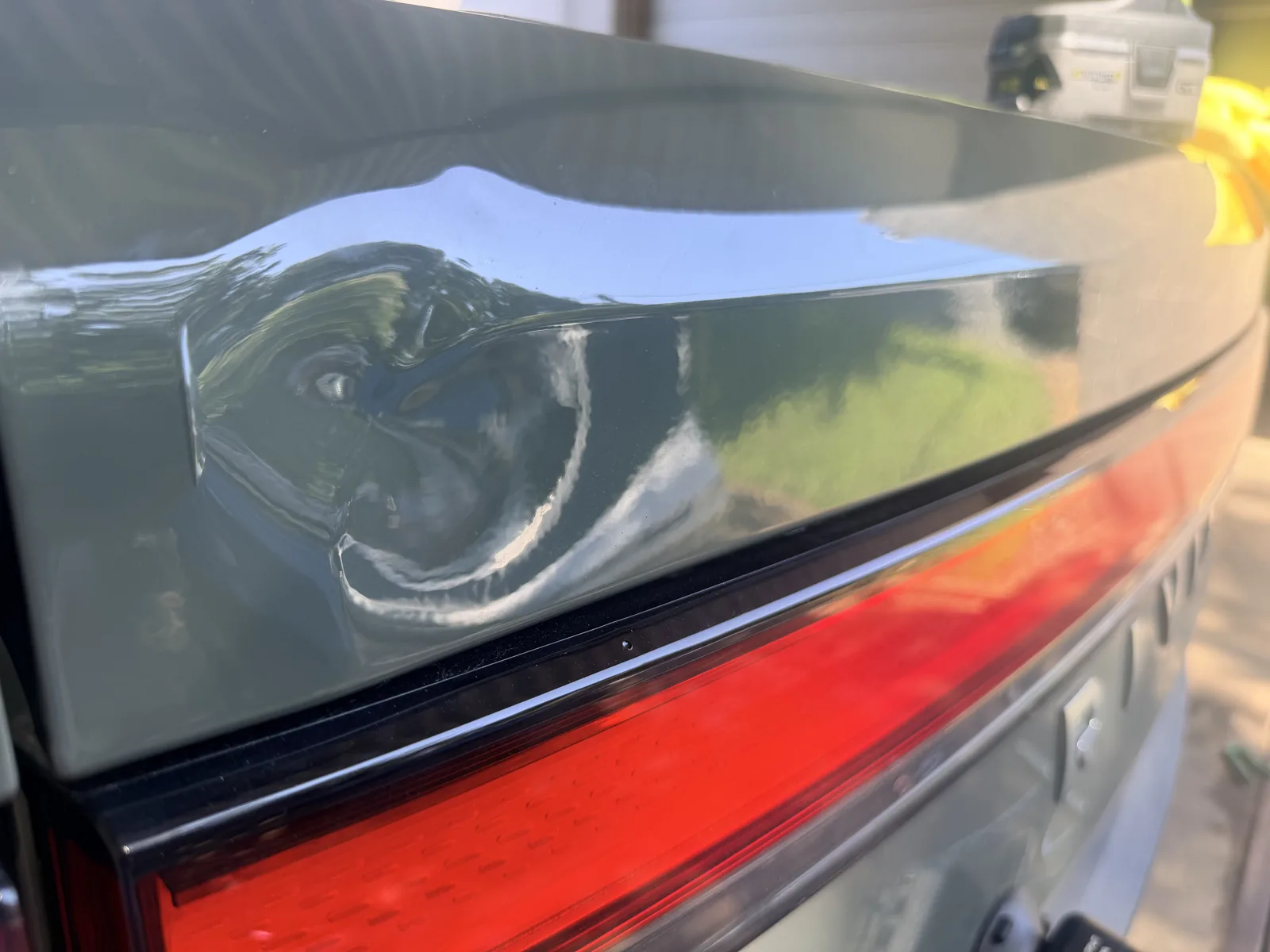
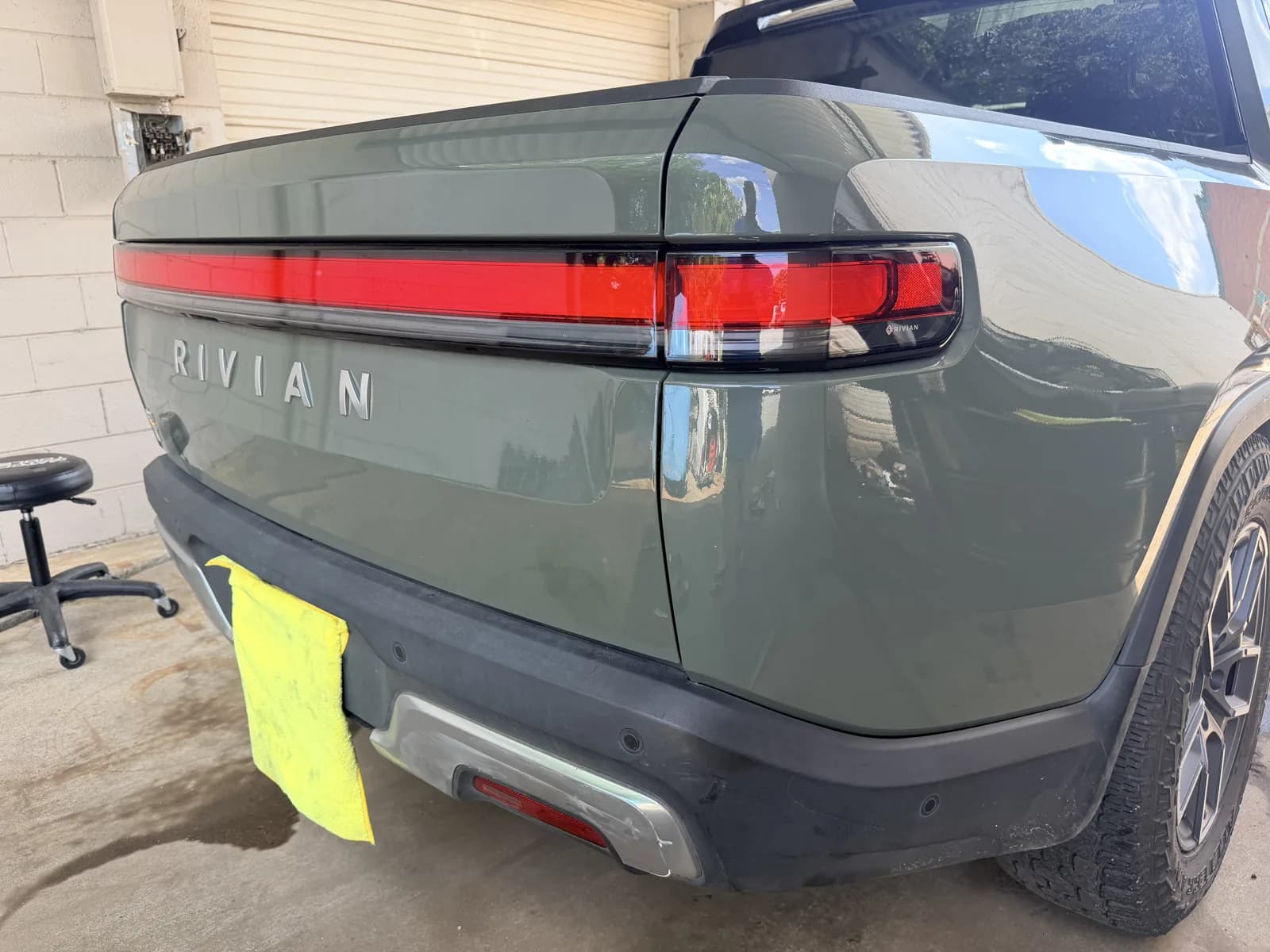
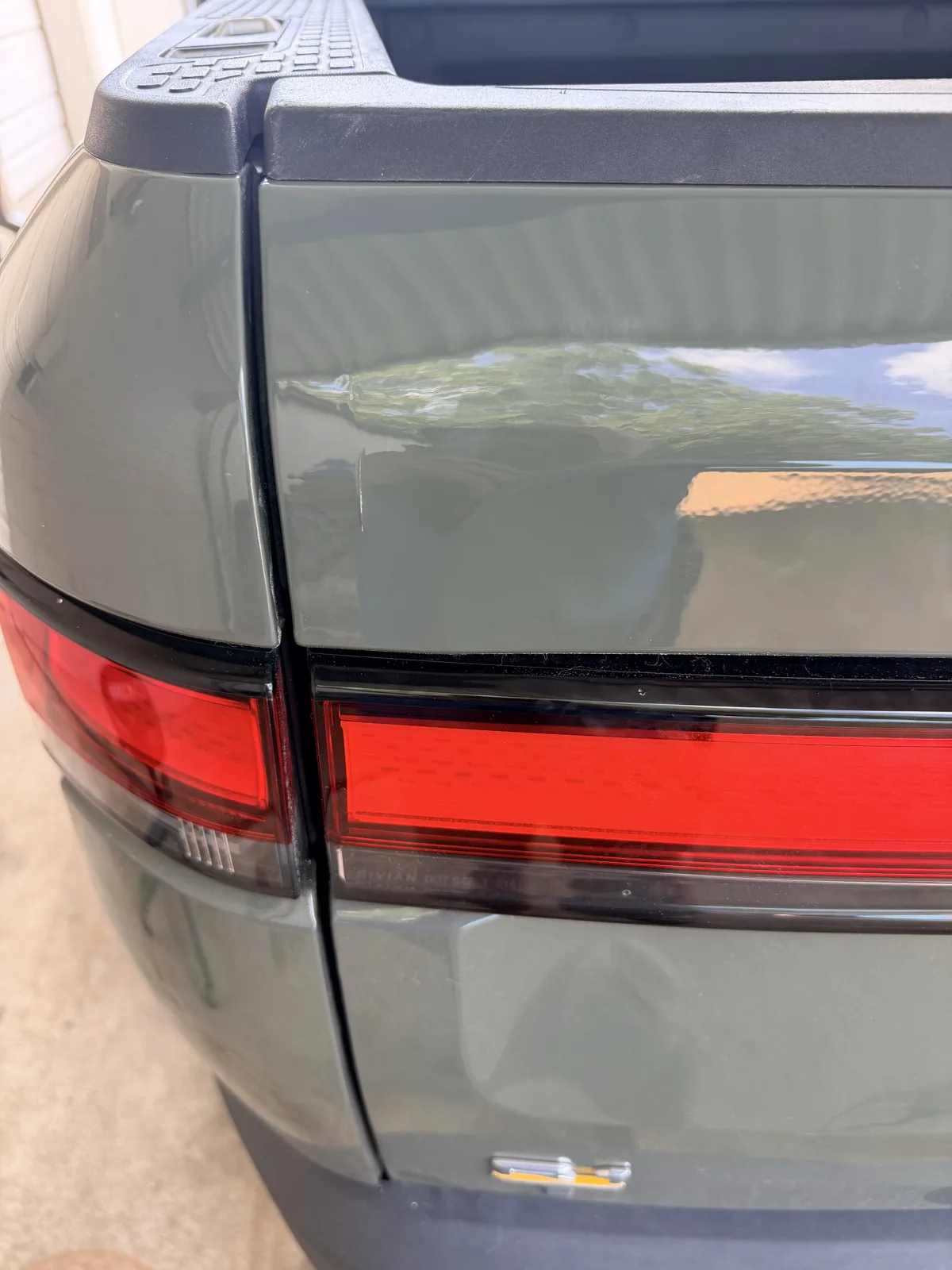
A Rivian tailgate repaired and back to the owner the same day. On an aluminum-intensive EV, keeping the factory finish matters more than almost anything — a repaint is permanent and detectable.
Aluminum Dent Repair FAQs
Can aluminum panels really be repaired with PDR?
Yes. Aluminum is repaired with the same fundamental PDR approach as steel — controlled pressure guided by specialized lighting — but adapted for a stiffer, less forgiving metal, often with controlled heat. The result on a properly repaired aluminum panel is the same as steel: the dent is gone and the factory paint is untouched.
Why does aluminum dent repair cost more than steel?
Time and risk. Aluminum requires more force under finer control, work-hardens as it's repaired, and offers no spring-back help from the metal itself, so the same dent takes meaningfully longer than it would in steel. It's still a fraction of the cost of replacing or repainting an aluminum panel.
How do I know if my panel is aluminum?
A magnet is the quick test — it won't stick to aluminum. As a rule of thumb: all 2015-and-newer F-150 body panels, most modern BMW and Mercedes hoods, most Audi, Jaguar, and Land Rover panels, and many Tesla and other EV panels are aluminum. Or just tell us your year, make, and model and we'll know.
Is my 2015+ Ford F-150 harder to fix than an older one?
The dents are harder to fix, yes — the aluminum body that debuted in 2015 needs aluminum-specific technique, especially on bedsides and door skins. But it's routine work for us, and PDR remains dramatically cheaper than replacing an aluminum bed panel. See our F-150 page for model-specific details.
Can hail damage on an aluminum hood be repaired?
Usually, yes. Aluminum hoods on trucks, luxury cars, and EVs take hail like any horizontal panel, and PDR handles it — the repair just takes more planning per dent than the same count on steel, because each one has fewer attempts available. Severe hail can stretch aluminum beyond full recovery on individual panels, and we'll identify any such panels honestly during inspection.
What happens if aluminum is repaired badly?
It can be ruined. Because aluminum work-hardens, a botched repair — too many pushes, wrong sequence, no heat management — can harden the damage into the panel to the point that no one can fix it, forcing replacement. That's the strongest argument for choosing experience over price on aluminum work.
Related Services
Expert paintless dent repair in Charlotte, NC.
Paintless dent repair for McLaren, Ferrari, Porsche and other luxury vehicles in Charlotte, NC.
Hail damage repair in Charlotte, NC with paintless dent repair — the insurer-preferred method.
Crease dent repair in Charlotte, NC.
Large dent repair in Charlotte, NC.
Wholesale PDR for Charlotte dealerships.
Keep Learning
Aluminum body panels dent differently, resist differently, and forgive less than steel — which is why many PDR technicians simply turn the work away. Here's how aluminum actually behaves, which vehicles use it, and what a proper aluminum repair requires.
For a luxury or exotic vehicle, paintless dent repair isn't just an option — it's usually the only repair that protects what makes the car valuable: its factory paint, its clean history, and its originality. Here's why PDR fits high-end cars so well, where the material challenges lie, and how to choose a technician for a six-figure vehicle.
A transparent breakdown of how paintless dent repair is priced, written by the technician who sets the prices. Why access and leverage behind the panel matter more than dent size, plus depth, position, aluminum versus steel, creases versus round dents, multi-dent work, how hail pricing runs through insurance, and why a photo is enough for an accurate quote.
A complete, plain-English explanation of paintless dent repair from a technician who has performed it daily since 2001: how it works, what it fixes, what it costs, and when it's the wrong choice.
Got a ding? Give me a ring.
Text a photo of your dent to 704-713-4663 for a free estimate — usually within minutes during business hours.
Rated 4.9 out of 5 across 103 Google reviews · Since 2001 · Shop in Mint Hill · Mobile across Charlotte