
Crease dent repair is the paintless restoration of long, sharp-bottomed dents — often running along or across a vehicle's factory body lines — widely considered the most demanding discipline in PDR.
Estimates start with a photo. Here is how to photograph a dent so the number you get back is accurate.
A crease is not just a long dent. Where a round ding displaces metal gently in all directions, a crease concentrates the damage along a sharp valley: the metal at the bottom of that valley has been stretched and work-hardened, and it holds its new shape with real stubbornness. Ask any group of PDR technicians which repair separates the experienced from the merely trained, and the answer is creases.
Creases come from sliding impacts rather than direct ones — a door edge dragged along your panel instead of tapped against it, a mirror or bicycle handlebar raked down a fender, a pole caught while backing at an angle. The worst of them run through a factory body line, flattening the crisp character crease your car's designers drew, which is visible from thirty feet away in any light.
This is the work Travis has refined over 25 years of daily paintless dent repair. Not every crease is repairable, and we'll never pretend otherwise — but far more of them are than most owners, and frankly most body shops, believe. Text a photo to 704-713-4663 and you'll get an honest read on yours, usually within minutes during business hours.
Why Creases Are the Hardest Dents in PDR
Three things make a crease hard. First, the sharp bottom: the impact folds the metal along a tight radius, stretching and work-hardening it so it resists returning to shape. A round dent wants to pop back; a crease wants to stay. Second, the length: a crease must be worked as a continuous line, and every push has to blend with the pushes beside it or the repair reads as a row of bumps where a valley used to be.
Third, and most demanding, is what a crease does to the surrounding metal. The panel around a crease is under tension, and releasing that tension in the wrong order creates highs, lows, and oil-canning that didn't exist before. The repair sequence — where to start, how much pressure, when to knock down, when to let the panel rest — is judgment that only accumulates through years of reading how metal responds. There's no shortcut and no tool that substitutes for it.
This is also why crease work is where inexperienced repair attempts do the most harm. A crease that's been badly pushed — stretched further, cratered with high spots, or paint-cracked from aggressive pressure — is dramatically harder to fix than the original damage, and sometimes impossible. If your crease has already been worked on, tell us; it changes the assessment.
Restoring Body Lines and Character Creases
The hardest crease of all is one that crosses or crushes a factory body line — the deliberate, sharp crease designers run down the side of a vehicle to catch light. Modern vehicles wear increasingly aggressive character lines, and when a dent flattens one, the eye picks it up instantly because the highlight running down the car simply stops.
Restoring a body line means rebuilding geometry, not just flattening a low spot. The line has to come back to the same height, the same sharpness, and the same straightness as the untouched sections on either side, and it has to hold a reflection cleanly along its whole length. Travis works these with the light board set to rake along the line itself, pushing the underside of the crease up while shaping the flats above and below it, checking the reflection after nearly every push.
Done right, the repair is invisible: the highlight runs unbroken from headlight to taillight and your factory paint never left the car. Done wrong, the panel needs filler and a repaint to recover the line by hand-sanding — which is exactly the outcome PDR exists to avoid. Our guide comparing PDR and traditional body shop repair explains what's at stake in that choice.
Which Creases Can Be Repaired?
The honest criteria: paint condition first, sharpness second, location third. If the paint survived the sliding impact — no cracking along the crease bottom, no scrape-through — repair is usually on the table. Shallow, soft creases repair extremely well. Sharp, deep creases repair to excellent but occasionally not perfect results, and we'll tell you which to expect before starting. Creases with cracked paint or torn metal are body shop territory, and we'll say so plainly.
Location and material shape the answer too. A crease along a door's midsection with clean rear access is the favorable case. One wrapped over a wheel arch, running under a brace, or crossing a panel edge raises difficulty. And a crease in an aluminum panel — an F-150 bedside, a luxury-car hood — is a different animal entirely, since aluminum work-hardens faster and forgives less; that's covered on our aluminum dent repair page.
Creases are also common secondary damage in larger dents and severe hail, where a big impact folds a line into the panel. In those combination repairs the crease is worked first, because everything around it blends to the line, not the other way around.
What Crease Repair Costs and How Long It Takes
Creases are priced individually — length, depth, sharpness, body-line involvement, panel material, and access all matter, so a photo tells us far more than a category ever could. As context, creases cost more than round dings of similar size because the working time is fundamentally different: a ding might take twenty minutes, while a body-line crease can take several hours of continuous, focused work. It's still typically well below the cost of filling and repainting the panel, with your factory finish preserved.
Most creases are finished in a single visit at our Mint Hill shop, and many are candidates for mobile repair at your home or office if lighting and access allow. Text a photo to 704-713-4663 — include one shot straight-on and one at a low angle along the panel so the crease's shadow shows — and you'll get a quote and a realistic time estimate. Our cost guide covers the pricing factors in more depth.
Pricing
Creases are priced by length, depth, and body-line involvement. Text a photo to 704-713-4663 for an exact free estimate.
How Crease Dents Works at Dent Press
- Step 1Text a Photo
Snap a photo of the dent and text it to 704-713-4663. You'll get a free estimate, usually within minutes during business hours.
- Step 2Get Your Quote
Travis reviews the size, depth, and location of the dent and gives you an honest price and timeline — no pressure, no upsells.
- Step 3Shop or Mobile
Bring your vehicle to our Mint Hill shop, or schedule mobile service and we'll come to your home or office in the Charlotte area.
- Step 4Drive Away Dent-Free
Most single dents are repaired in one visit, with your factory paint untouched and your panel restored to its original shape.
Real Repairs, Before and After
Photographs and clips from actual repairs. Watch the reflection rather than the dent — a panel is judged by whether reflected lines run straight across it, which is the same thing a technician reads off a light board.
White SUV Door Crease
Provincetowne, Charlotte, NC · June 2026
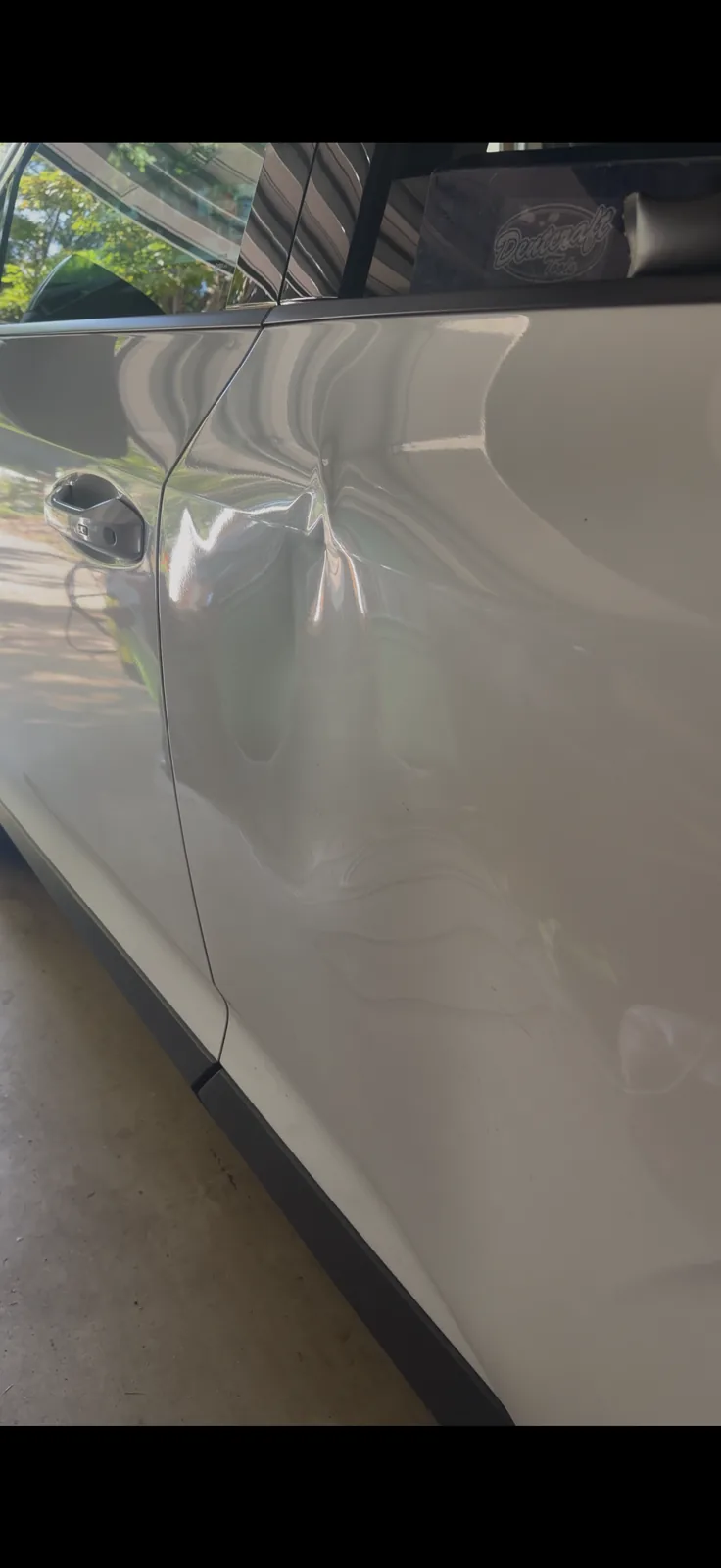
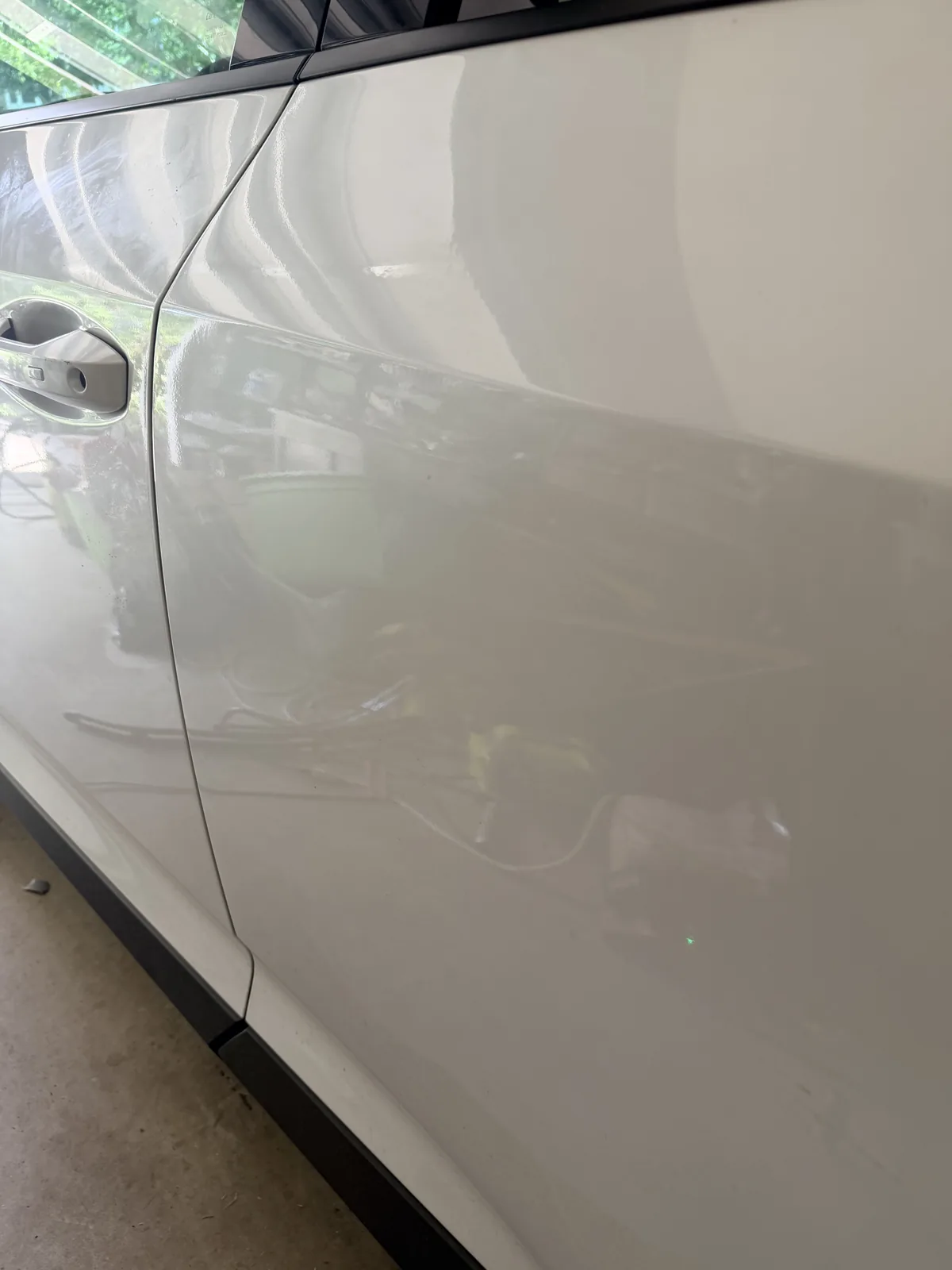
One job, documented twice — stills and video of the same crease. It was worked in the Provincetowne neighborhood off Providence Road in far south Charlotte, just south of Ballantyne, in the owner's own driveway. No drop-off, no rental, no repaint.
Chevrolet Silverado Bedside
Mint Hill, NC · June 2026
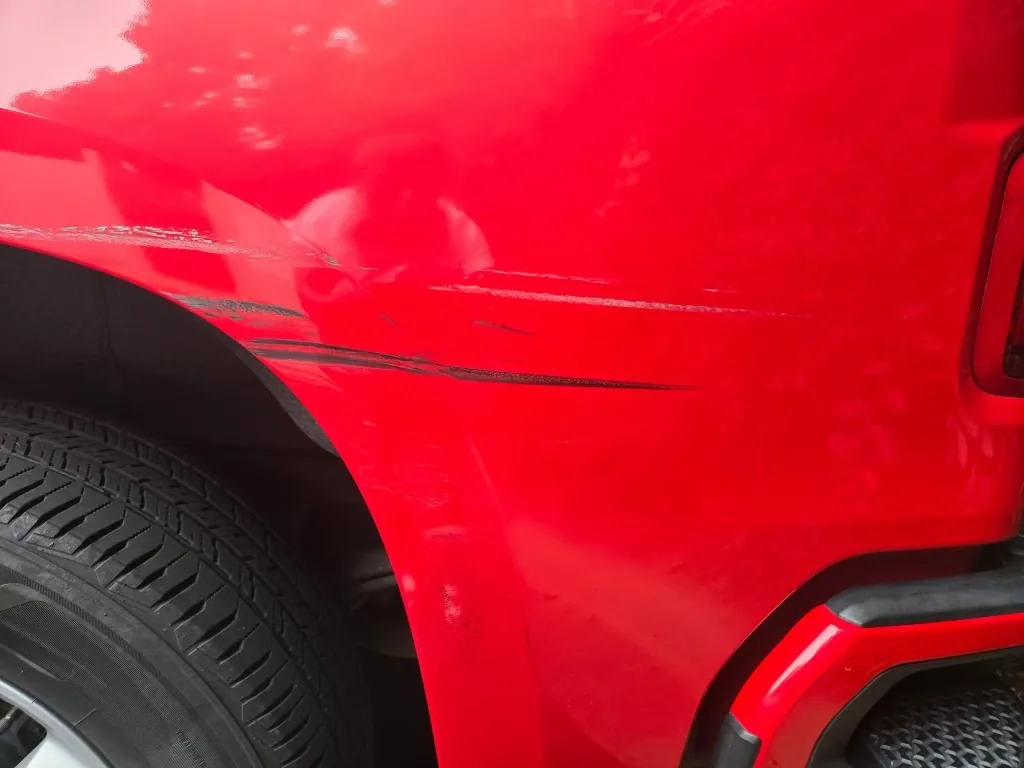
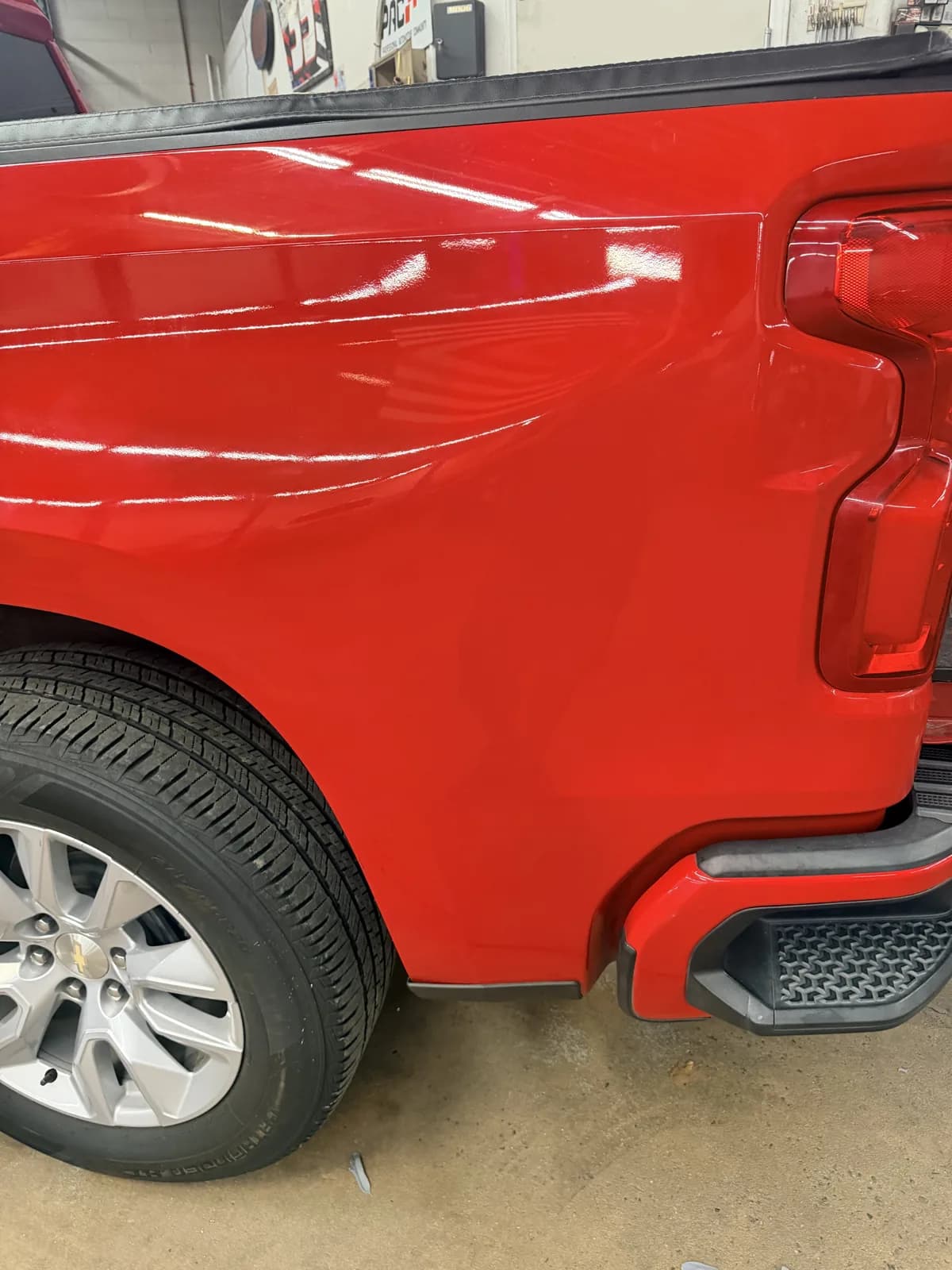
Truck bedsides take the worst hits — they're large, unsupported panels, and the metal is heavier gauge than a car fender because it's built to work. This one was corrected without repainting.
Rear Quarter Panel Crease
Mint Hill, NC
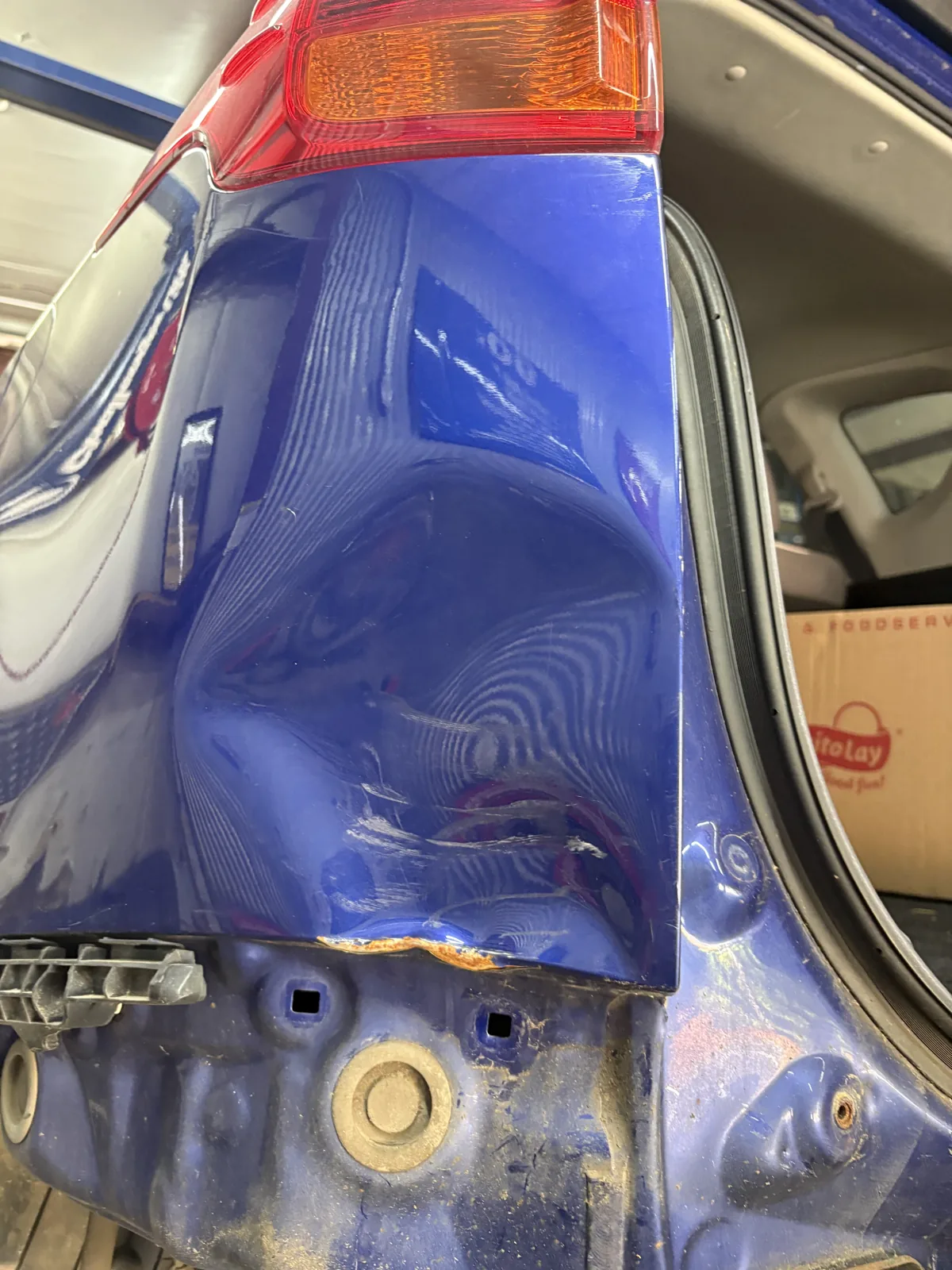
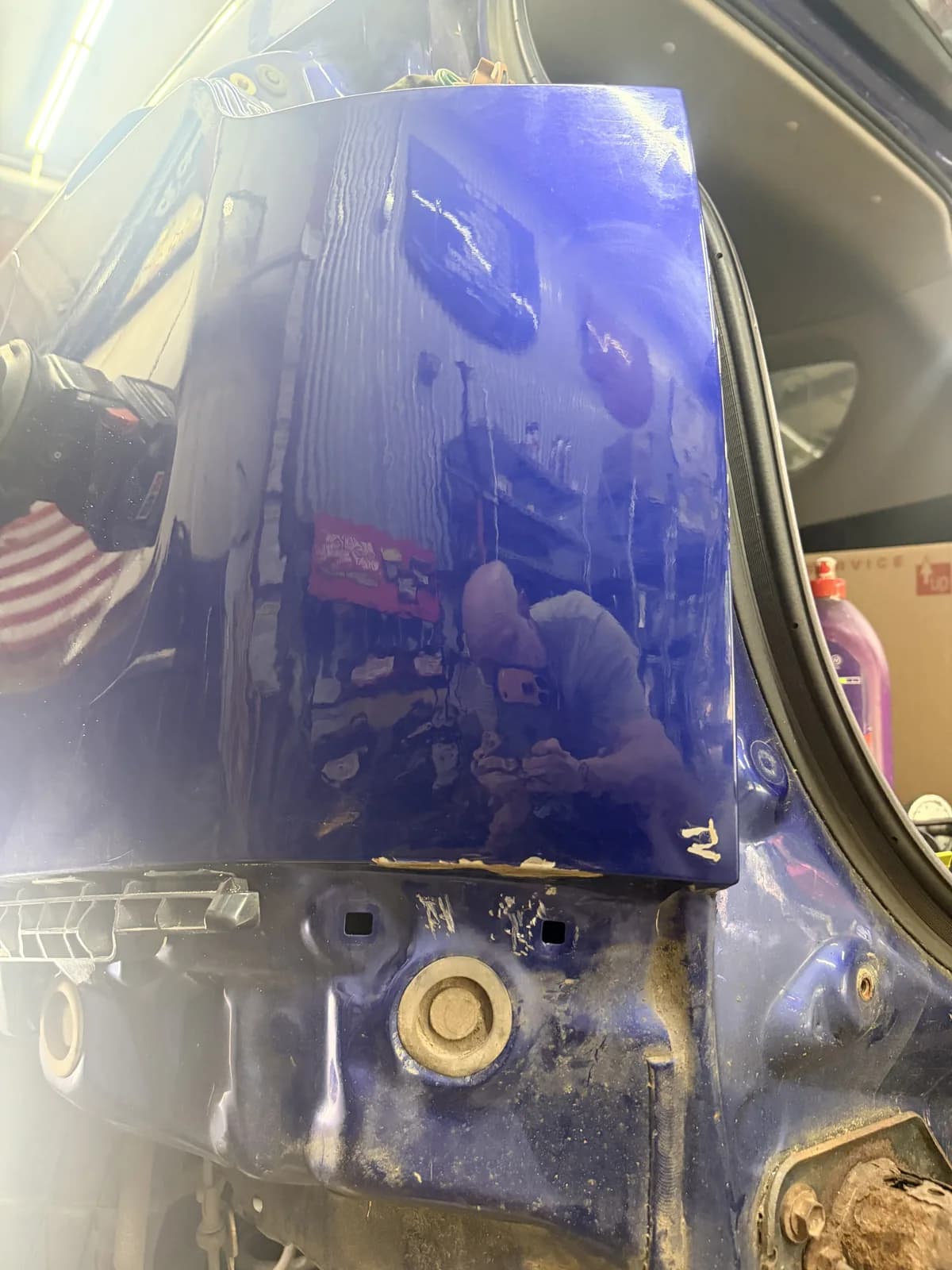
Creases are the hardest repair in PDR — the metal at the bottom of the valley is stretched and work-hardened, and it has to be released in the right order or the panel fights back. This one came all the way back.
Crease Dent Repair FAQs
Can a crease dent really be fixed without repainting?
Very often, yes — provided the paint along the crease is intact and the metal isn't torn. Creases are the most demanding PDR repair and results depend heavily on technician experience, but a properly repaired crease is invisible and your factory paint never gets touched.
Why do creases cost more than regular dents?
Working time. A crease has to be repaired as a continuous line with stretched, work-hardened metal at its bottom, which means sequential pushing, blending and checking along the whole length rather than the handful of pushes a round ding needs. It's still typically far cheaper than filling and repainting the panel.
Can you restore a flattened body line?
Yes — rebuilding crushed character lines is a core part of our crease work. The line is reshaped to match the height, sharpness, and straightness of the undamaged sections so the reflection runs unbroken down the panel. It's slow, precise work, and it's the repair we're proudest of.
What if someone already tried to fix my crease?
Tell us up front — prior attempts change the picture. Metal that's been over-pushed or stretched by a bad repair is harder to work, and cracked paint from aggressive pressure can rule PDR out. We'll assess honestly; sometimes we can recover a botched crease, sometimes the panel needs conventional repair.
How should I photograph a crease for an estimate?
Two shots: one straight-on from a few feet back, and one at a low angle along the panel so the crease catches a shadow or reflection. Creases hide in flat light, so the angled shot is the one that tells us depth and sharpness. Text both to 704-713-4663 for a free estimate.
Related Services
Expert paintless dent repair in Charlotte, NC.
Large dent repair in Charlotte, NC.
Aluminum panel dent repair in Charlotte, NC.
Door ding repair in Charlotte, NC.
Paintless dent repair for McLaren, Ferrari, Porsche and other luxury vehicles in Charlotte, NC.
Keep Learning
Paintless dent repair and traditional body shop repair aren't competitors so much as tools for different jobs. This guide gives you the decision framework a 25-year PDR technician actually uses: one look at the paint answers most of the question, and cost, time, and resale value settle the rest.
A transparent breakdown of how paintless dent repair is priced, written by the technician who sets the prices. Why access and leverage behind the panel matter more than dent size, plus depth, position, aluminum versus steel, creases versus round dents, multi-dent work, how hail pricing runs through insurance, and why a photo is enough for an accurate quote.
A walkthrough of the entire dent repair experience from the customer's side: how the photo estimate works, what happens when you arrive, why we show you the dent under the light board before touching it, what the repair looks and sounds like, how the final inspection works, and an honest explanation of what a 100 percent versus 95 percent repair means before you commit.
A complete, plain-English explanation of paintless dent repair from a technician who has performed it daily since 2001: how it works, what it fixes, what it costs, and when it's the wrong choice.
Got a ding? Give me a ring.
Text a photo of your dent to 704-713-4663 for a free estimate — usually within minutes during business hours.
Rated 4.9 out of 5 across 103 Google reviews · Since 2001 · Shop in Mint Hill · Mobile across Charlotte